Antifa Tchotchkes
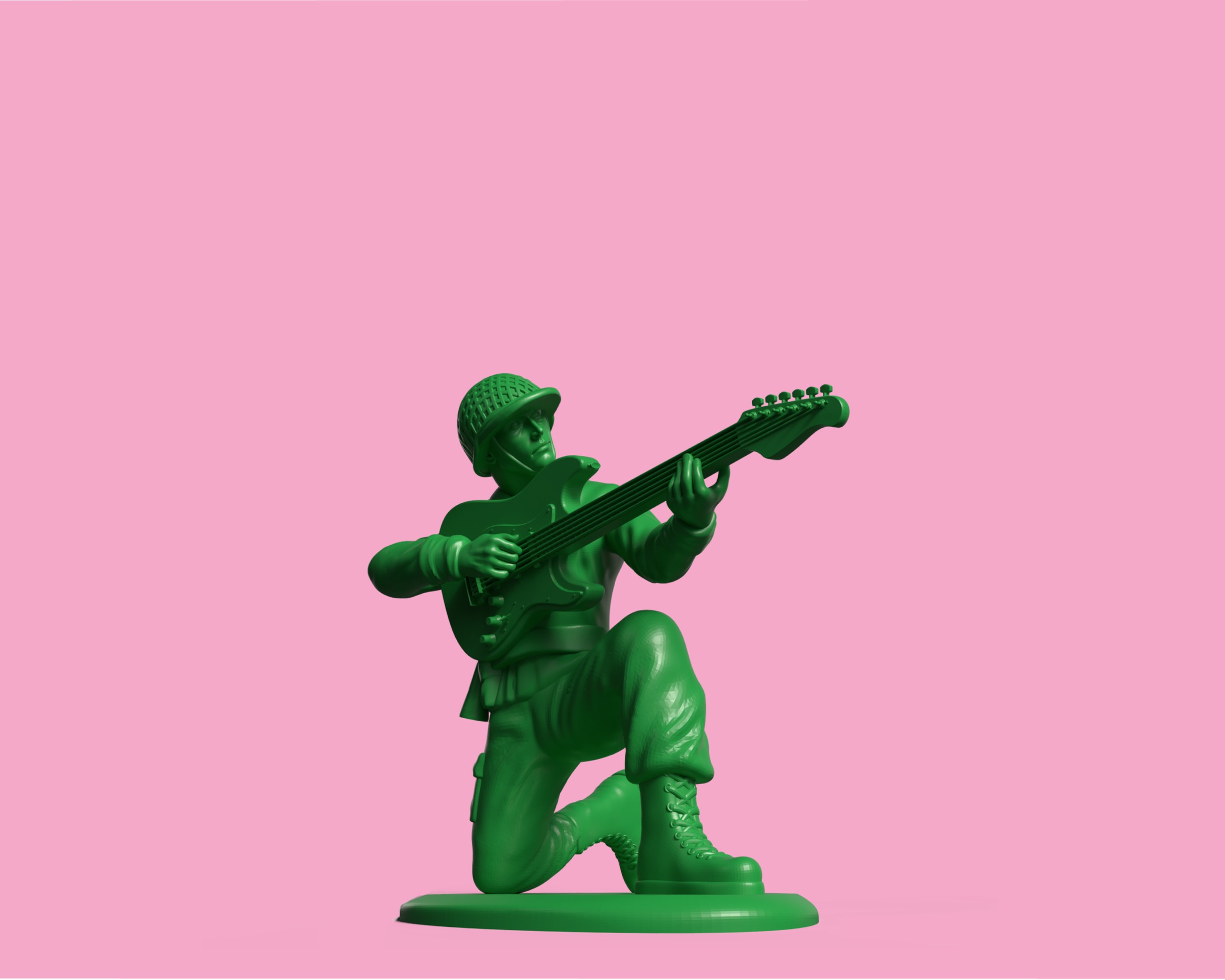
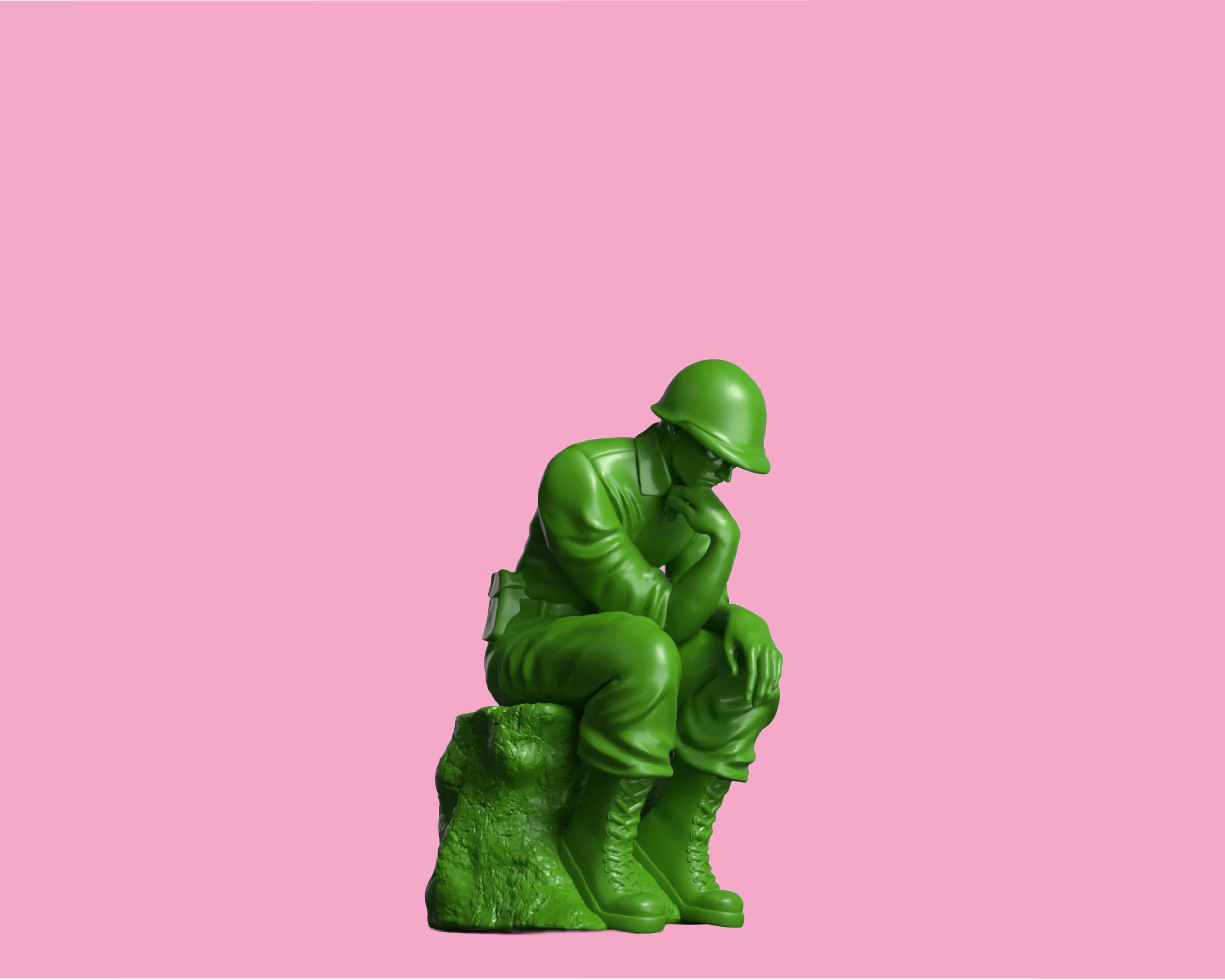
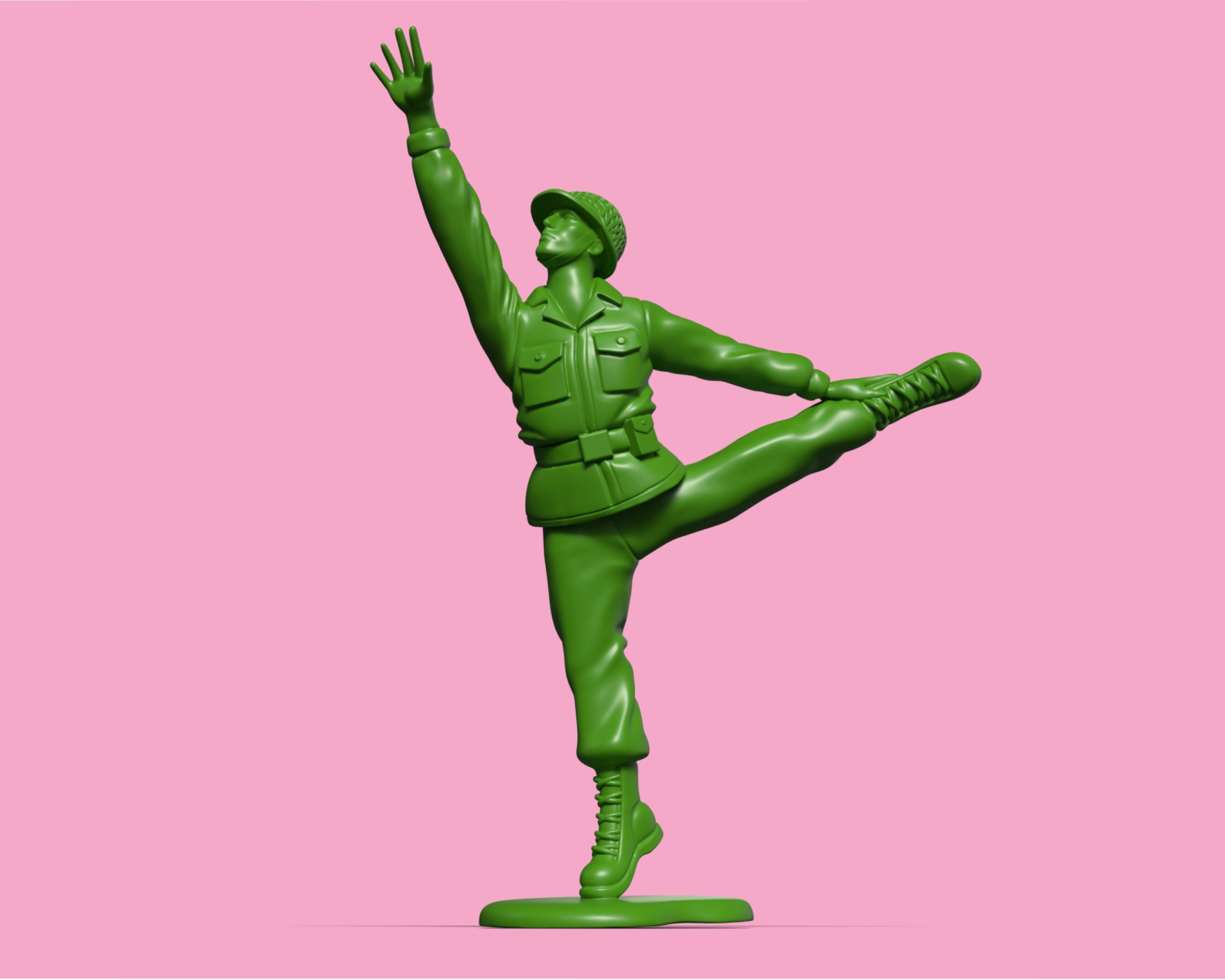
Green plastic soldiers, subverted. Each figurine kneels, dances, plays, thinks. The pose is the argument.
These started with a bag of toy soldiers — the kind that come in plastic, fifty to a pack, posed for war. The intervention was small. Change the pose, change the meaning. The same green, the same scale, the same plastic base. Different action.
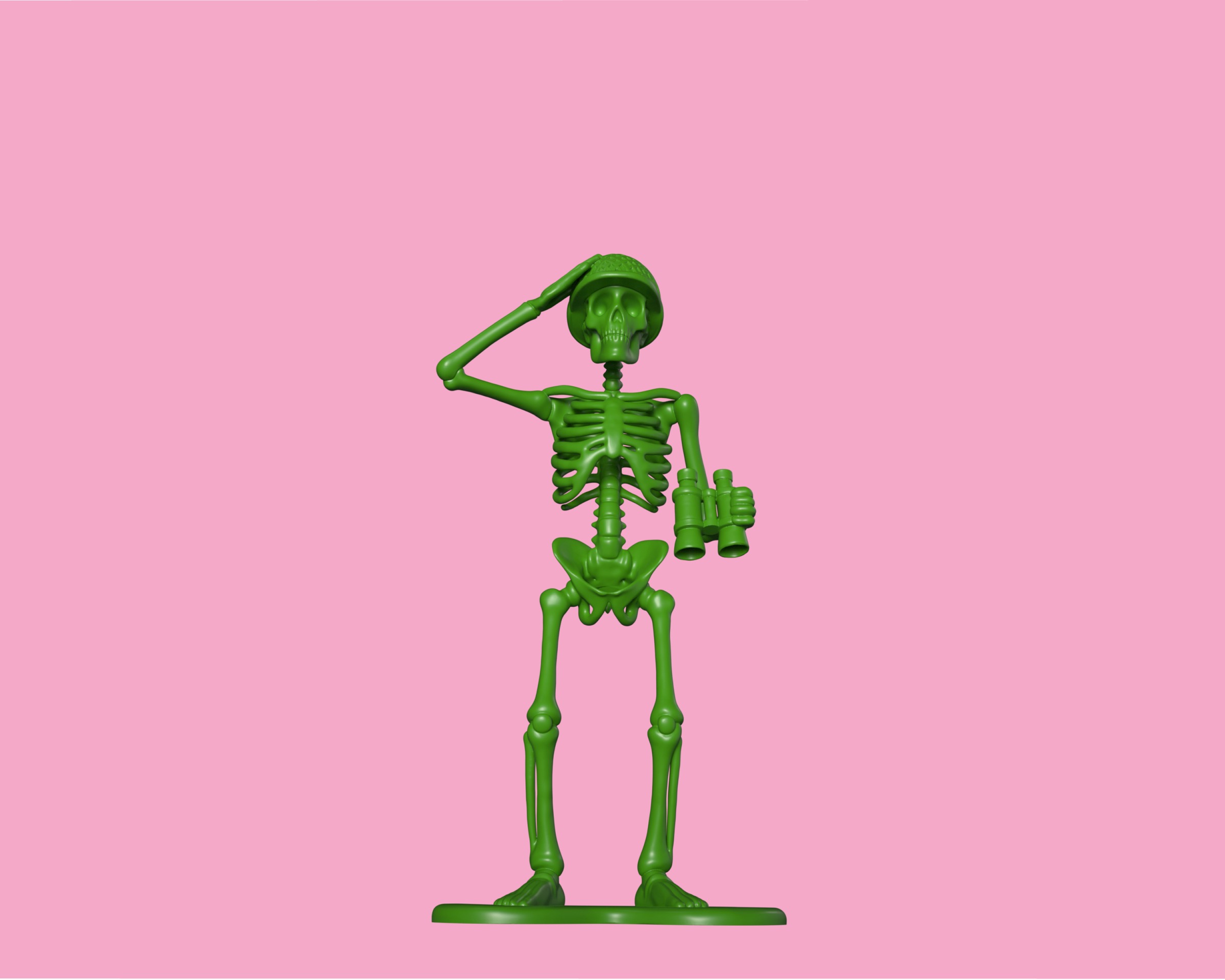
A soldier playing electric guitar. A soldier doing ballet. A soldier as Rodin's Thinker, brow furrowed, chin on hand. A skeleton in a helmet, looking through binoculars at something that isn't there. Each one is a small refusal — a deliberate pose-swap that makes the same object mean something else.
The pink ground is intentional. It depoliticises before it argues. The figures aren't lined up against a battle scene. They're catalogued like museum objects — equal-spaced, equal-lit, given equal claim to seriousness. The argument is that a soldier shaped like a dancer is no more or less plausible than a soldier shaped like a soldier. Both are postures handed to a child in plastic. Both can be rearranged.
Photographed in studio, lit flat, the series is open-ended. Whatever else turns up gets photographed and added.
Editorial — placeholder body. Your voice will sharpen this. The conceptual framing is in the imagery itself; the writing's job is to give the project the modest sentence-level seriousness it deserves without over-explaining what the figures already say.